Tuesday, 17 October 2017

Where's my Content: finding the DLC

 This post is largely prompted by the Obsidian/Paradox survey about DLC and what's an apt distribution strategy for DLC and what price points are worth considering for consumers. I took a different approach to analysing the DLC situation with Tyranny.

Downloadable content or DLC, is often provided readily available in games and promotes a number of ways of accessing it for a player, however this is not always the case in a number of games. For myself I am talking about Tyranny and Stellaris which provide increased functionality in their games (equivalent to Civilization expansions). However they do not provide this content to the player immediately. Instead the content is spread out across each gameplay cycle (Act I, II and III in Tyranny) based upon the player's progress or obstructed by the need to complete different conditions for the DLC content to come into effect (such as Stellaris' DLC Synthetic Dawn for ). For the purposes of making a deeper system this makes the game more mysterious and complicated, however for players familiar with the game series the need to search through content already traversed, and as such the game becomes one where finding the content is the first puzzle to undertake. However before delving into the DLC of Tyranny and Stellaris a quick reflection on other videogames noted for their DLC will help situate the discussion.

Fallout 4 DLC

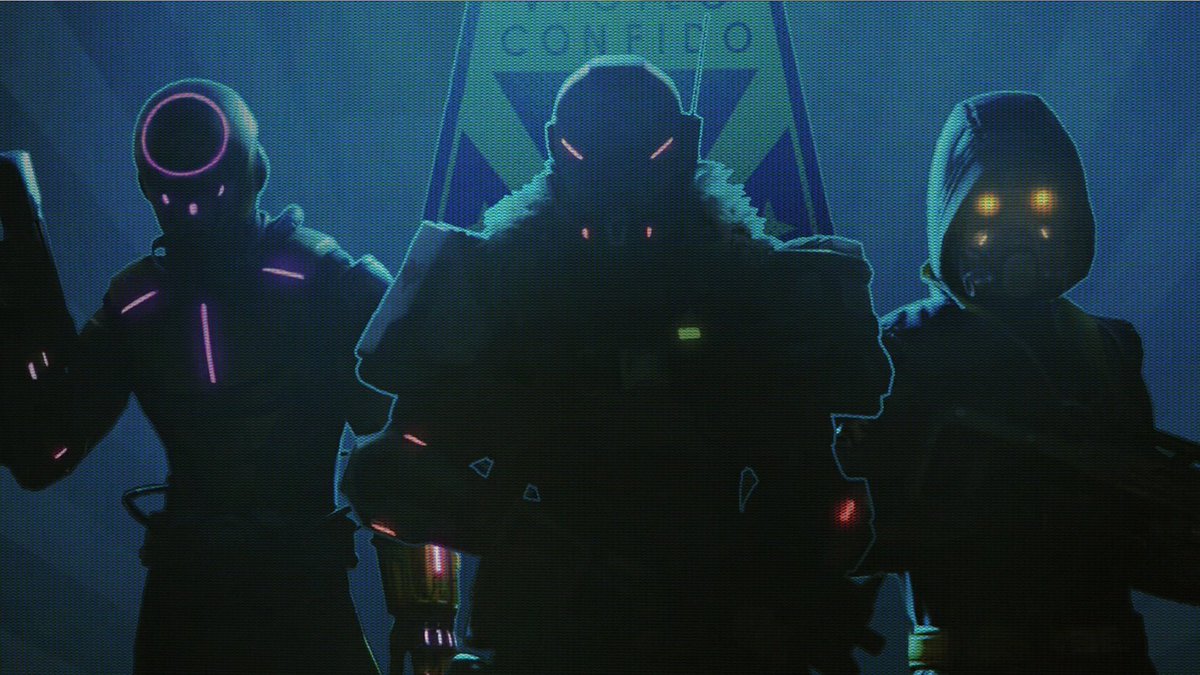
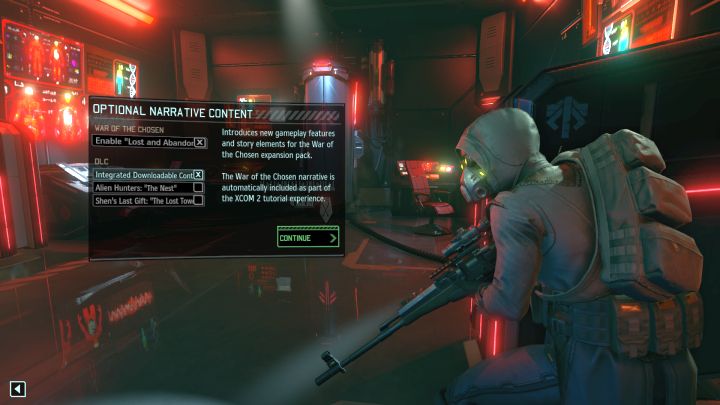
Comparatively to Paradox Interactive's approach DLC from other companies appears to be much more immediate in it's presentation to the player. Focusing on XCOM 2 or The Witcher 3, both games  highlight which version of their game that the players is playing is part of. For XCOM 2 the player is able to on the launch screen (just before the game starts, a preface for news, or changing options) to choose which version of the videogame to play, following this there is a different introduction video, a different menu screen, the loading screens, and a different introduction to the game which includes highlighting new mechanics and content.

XCOM 2 War of the Chosen Launch screen.
DLC Loading Screen for XCOM 2 War of the Chosen.
New Game appears differently for the player, readily identifying new characters for the player to use in their campaign.
At each of these stages XCOM 2 identifies that it is a different experience, with different content and a constant presence of title to remind players of the new content.For The Witcher 3 such new content is left in the in-game window as well as the launcher for the videogame.

Launcher for Witcher 3
Game Menu for Witcher 3.
Selection for DLC content.
Interestingly The Witcher 3 allows for players to access this new content immediately, separately from the main quest of The Witcher 3. To this extent the manner in which the DLC is introduced is one which players can access from all or most styles of play. In this way players can combine their experiences of The Witcher 3 with the DLC or jump straight into it without having to complete any milestones besides purchasing the game. It should be noted that the scores for these DLCs were well received as well as numerous.


For Tyranny the DLC is present in the in-game menu (on the top right of the screen) and in some of the start options (allowing for the DLC content) however there is not a lot of indicators for the addition of this new content.

Tyranny Game Menu
For Tales of the Tiers the presence of in-game event pop-ups on the world map (an hour or two into the game) reveals the addition of the DLC content. For Bastard's Wound the additional content is only available after the first act and after the completion of Leviathan's Crossing, from there players are contacted by a messenger and can go to the new content alongside their regular completion of the main quest. Other than this there is no new content or indication of new content for the player in their playthrough of Tyranny, this means that while there is new content it is weaved into the pre-existing game, and not treated as a unique separate section (like in XCOM 2 or The Witcher 3).

For Stellaris (which is probably the most different game from the others we've examined) the presentation of DLC is done so through the launch screen, the in-game menu, and in the loading screens. The content is a mixture of discreet units (based in the DLC content) and the normal updates to the game (where it is constantly being updated), as such players who purchase the DLC are treated to a combination of both discrete new gameplay (the ability to build super structures Utopia, play as synthetics Synthetic Dawn, or battle space creatures Leviathan), and general improvements to the overall game (the manner in which sectors, governors, unity and other aspects have changed).


Loading screen for Utopia DLC
In this manner players are able to see both what their purchases provide, and are able to enjoy the benefits of constant patching. There is a similar barrier in Stellaris to content the way Tyranny presents DLC, in that certain states (completing different requirements) are necessary to gain access to different sections of the DLC - for Synthetic Dawn players must be a synthetic race to gain access to that content, for Utopia players need to progress to a certain technological stage, and for Leviathan players must find these space creatures to be able to fight them. The design of the game and the manner in which Paradox Interactive release patch notes and additions to Stellaris supports the style of DLC integration of being a distinct unit but also one that builds upon the regular updates to the game.

For Tyranny such integration of DLC seems unconventional alongside the type of game (RPG) that it is, to accompany this the incremental nature of some of the DLC that is extra random events to occur seems like a general improvement to the game (ala a patch) rather than a discreet unit. Furthermore to access this aspect of the game the player relies on a degree of randomisation, or rather a deep understanding of the game system to force these events to happen. As opposed to the DLC for XCOM 2 and The Witcher 3 which present new content readily, the barrier to entry in Tyranny is high for the content to be enjoyed.

Although there are certainly great success stories with the application of DLC within various videogames, for Tyranny the application of DLC doesn't sit well within pre-established RPG conventions (from The Witcher 3: The Wild Hunt) or within the realm of Paradox Interactive's other products.

Saturday, 30 September 2017

Critical Eye: Lara Croft Tomb Raider


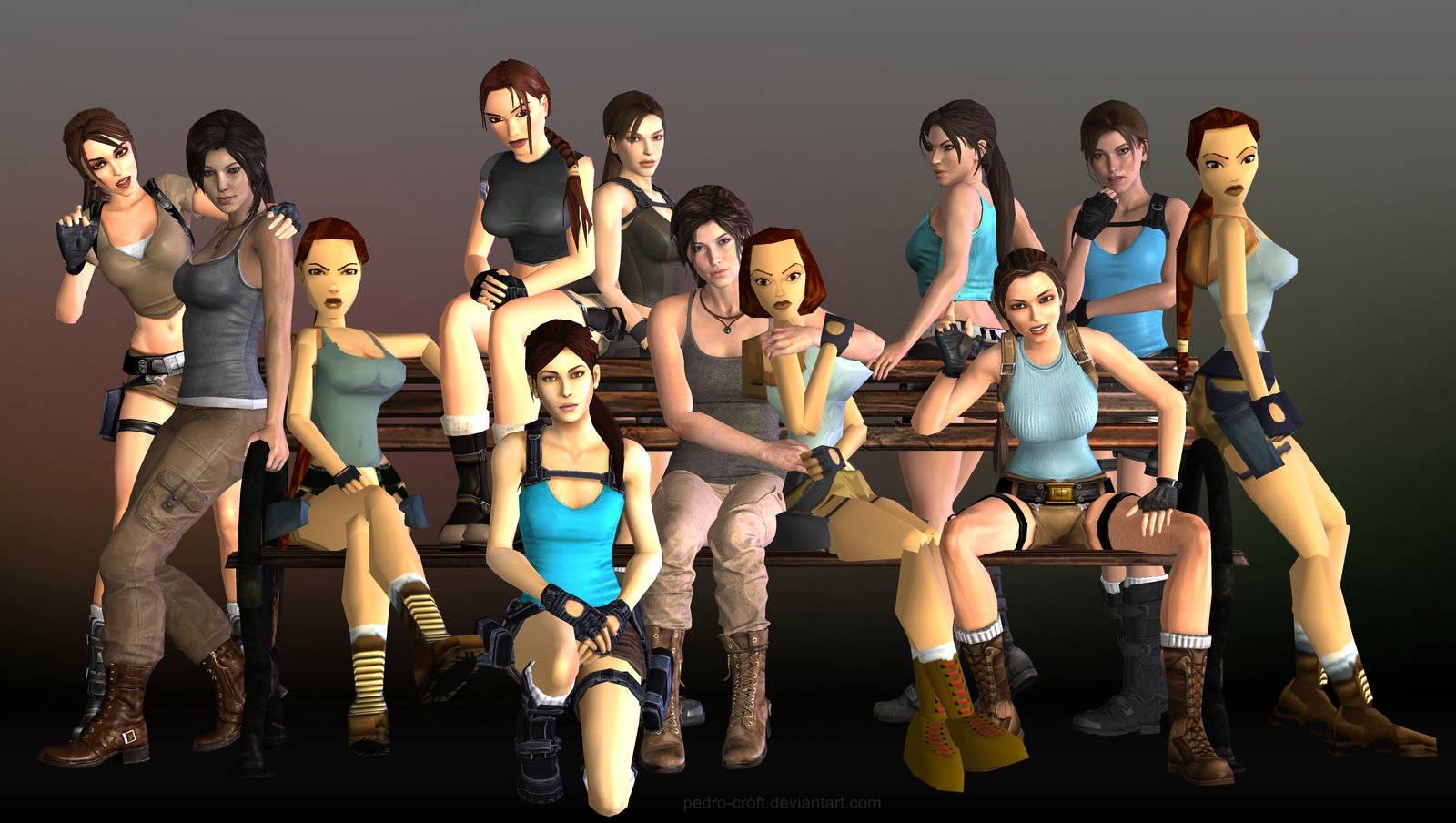
There’s a frequent argument for the improvements, the progression of female representation in videogames, from Tomb Raider which is praised for a more realistic representation of the female body, to the improvements of female representation (as lead and playable characters) within Gone Home, Her Story and Life is Strange. Yet even in the supposedly progressive games the interactions of these female protagonists are still constrained by gender norms that still restrict these women to be supportive rather than having a spotlight solely on them.

For today we’ll be focusing on Tomb Raider to broach some of these notions of advertised ‘progressiveness’ against that of what’s actually in the game.


The biggest indication for equality as promoted by the developers and reviewers was the more realistic body image. Although certainly a nod to ‘realism,’ especially when contrasted with previous Tomb Raider games a more realistic looking character can still be sexually objectified, and does not make a game inherently progressive. In some ways it restricts the ability of objectification in the game but this offers no counter argument to the male gaze that pervades Tomb Raider.

By male gaze the perspective of the camera instantly provides a perspective of Lara Crofts sexuality. In the midst of Lara’s most harrowing scenes, from frowning from falling, from being impaled, the viewer is invited to see Lara as primarily a sexual object and not someone in fear of their life. The added extended death scenes further promote such exploitation of Lara’s pain and anguish as desirable for the player in that each type of death is specifically animated for the gratification of the player. There is added context in the suffering of Lara, without failing a task the player has no means of accessing it, and so is encouraged to in the process of a game, to fail to see these deaths. 


The above video showcases a particularly nasty case of in-game failure and strongly suggests further sexual violence against Lara. The game doesn’t address this scene at all which makes its inclusion and later lack of commentary one that doesn’t progress any discussion of sexual violence, and if anything normalises apathy towards it. This scene aside there are plenty of others which are gory for the sake of gore and visual spectacle rather than for character progression or storytelling techniques.
Such added content can be explained away as padding or necessary for such a game (in the words of Ron Rosenburg executive producer of the game ‘you want to protect her,’). These deaths are necessary to emphasise the death that surrounds Lara on all sides. However, in providing such graphic deaths and attention to detail in these scenes the emphasis seems to establish that Lara’s suffering is meant to be entertaining for the audience.  The inclusion of these graphic deaths does more to take away from Lara Croft’s independence and promotes that Lara naturally cannot take care of herself.

Moving away from such discussion of deaths and the accompanying male gaze on Lara the next area to examine is how well the narrative represents Lara Croft, and other female characters as autonomous beings without succumbing to gender performativity (mainly being support roles).
Using the Bechdel test Tomb Raider escapes from being labelled solely a masculine tale since the female characters do talk about something else besides men. However, looking at the narrative many of the movers and shakers of the story rely on the presence of men. That’s not to say that there’s no need for men in the story, rather the narrative relies on normative conventions that have men as the primary force. 

So, let’s review:
  • Lara Croft explores the isle of Yamatai as it was one of the last things Lara's father wished her to discover. Although this provides a good motivation for Lara to go to Yamatai island, it might have been more autonomous to have Lara exploring due to her own interests rather than accomplishing her dead father’s will.
  • Lara Croft is saved a number of times (sinking ship, attack by cultists, frostbite and jumping on helicopters) by her father figure Captain Roth. Roth is ultimately killed because he saves Lara too many times. Having Lara saved once may have been enough, but three times makes Lara seem more than inept in the wilderness.
  • Lara Croft’s villains are primarily bad dudes (Mathias, and Whitman). The big bad is revealed to be a female spirit, but she is largely characterised as a big ol’ ghost rather than a character with any depth. Having Lara’s enemies as something a bit more diverse than opiniated white guys, may be a step in the right direction.
  • Lara Croft’s best friend, Sam, is found by the end of the game to be a vessel for an empress (and so de facto royalty). Sam needs to be rescued to keep her being possessed by undead royalty by Lara – Sam otherwise serves no purpose other than a motivation to keep going further. If Sam provided some gameplay value (such as Alex in Half Life 2 or Elizabeth in Bioshock: Infinite) then her role would be much stronger.
  • Lara Croft rewards one of her companions, Alex the IT guy, with a kiss for heroically failing to grab tools for the other members of the crew. Alex seems to be redundant in the game and in the narrative as someone who shouldn’t at all be on a trip to explore a forgotten island. Removing this character and scene completely would improve the game immensely, or alternatively apply Alex with a bit more character than IT guy who fails to do one job.

The only other female character beside Lara and Sam is Joslin Reyes who, provides no gameplay help, and offer only negativity to any plans of escape or survival for the group. Only at the end does she change her mind based on the urging of the other (male) members of the crew and helps Lara to go rescue Sam.  Also, the game highlights Joslin’s femininity with the fact that she is a single mother.
Now all of these points can be argued as pointing Lara to becoming self-sufficient and turning into the rugged and independent woman that she appears to be in other Lara Croft games. But such claims appear to do more to hide weak characterisations of women, and to defend the game from criticism. From asking such questions and analysing Lara Croft as something which can be improved the game and representations of women can be made much better.

Comparing these characterisations against that of the previous Crystal Dynamics game Tomb Raider Underworld, Lara Croft can be seen as more self sufficient.


In the above video Lara is seen to be independent to the extent that when her friend Zip refuses to drop his weapon (under a misapprehension about Lara) Lara calmly shoots him in the leg to prevent the situation from escalating. Although a bit extreme (to say the least) it’s a pragmatic way of dealing with the problem at hand. Through this action Lara Croft identifies herself character that deals with no nonsense to resolve problems.


Later her hacker best buddy Alister Fletcher, dies to Lara’s evil Doppelganger, and sure she morns him, but she doesn’t give him a kiss ala 2013’s Tomb Raider. She ruminates about his fate and resolves to figure out what’s happening with her doppelganger. Also, not that it should need mentioning having an IT guy at Croft manor makes a lot more sense than in the middle of the jungle. The added kick arse ability to shoot willy nilly at everything and not have extended death scenes for failing some quick time events also makes Underworld empowering of Lara – she’s supposed to win, there’s no reward for death.

From this comparison it already seems that Underworld portrays Lara in a much stronger light than in the Tomb Raider of 2013. Rise of the Tomb Raider 2015 is a somewhat better game but does not reach the same levels of independence and kick arse-ness that was displayed in Underworld.
All of this is not to say that there are not female representations in games, especially with the recent release of Uncharted: The Lost Legacy, more so the point is that even within videogames that are supposedly progressive there is more that can be done to both improve the narrative and gameplay, alongside the representation of women.

Tuesday, 12 September 2017

Horzon: Zero Dawn


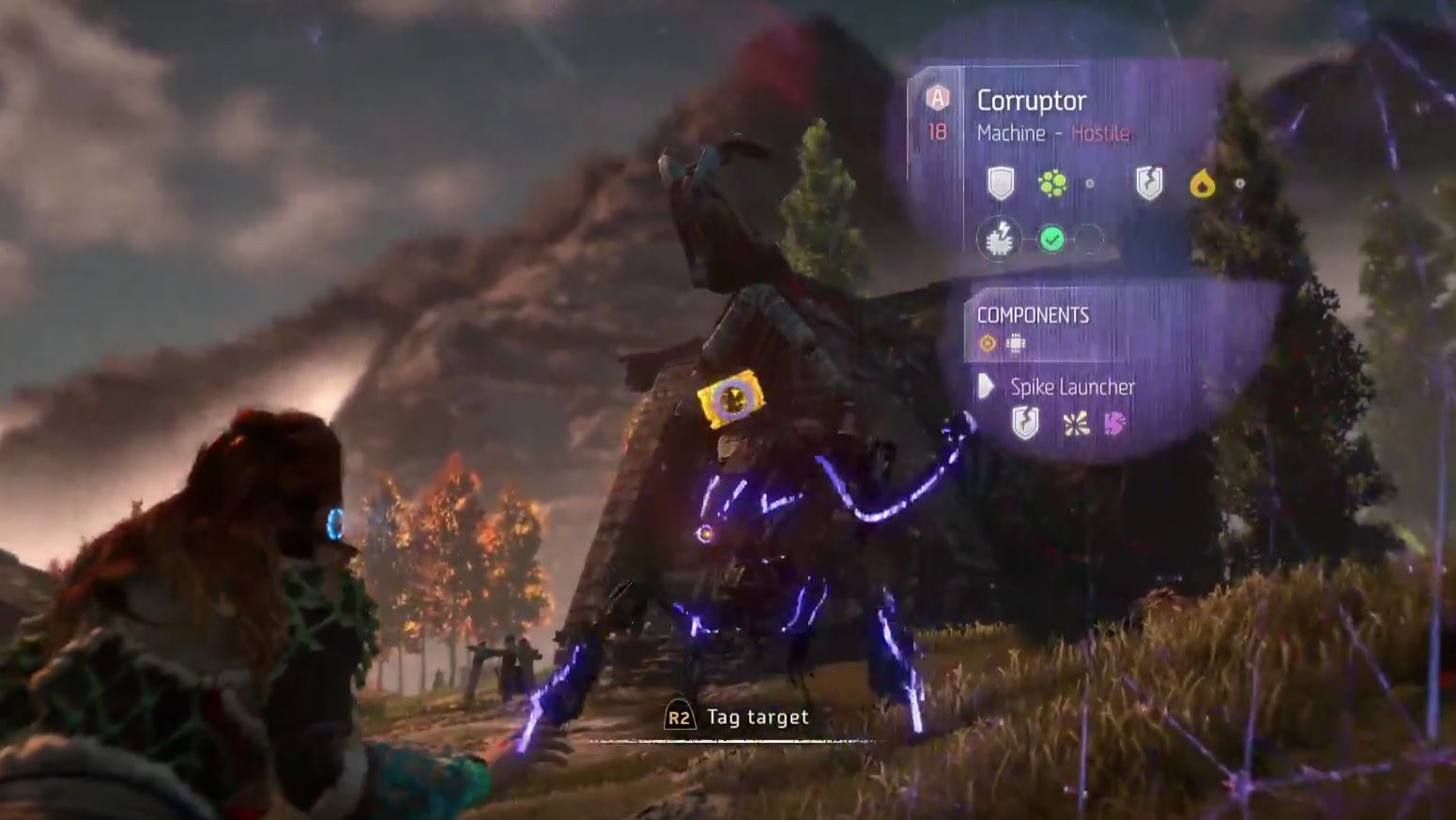
Horizon: Zero Dawn while widely praised, is not an open world action-adventure game that I enjoy. That being said generally action-adventure games rarely get a glowing review from myself, such as The Last of Us or the Uncharted videogames. However in the case of Horizon: Zero Dawn my lack of enjoyment has less to do with the genre and more to do with the implementation of the open world elements to the player's actions. Before going through the elements which were not enjoyable, Horizon: Zero Dawn should be praised for the aspects that it did well.

Taken from Guerrilla Games website

  • Localised damage for each enemy - this gameplay element was seen largely with the robotic enemies, allowing for an identification of the various subsystems of the robot which you the player could disrupt. Furthermore the added layer of different elemental effects that could be used against each of these subsystems allowed for variation in the combat. E.g. removing armour, shocking, freezing or burning these enemies.


  • Combat mechanics - when the combat flowed together well in a combination of jumping, sliding and dodging the fighting felt exhilirating. However this did become tiring when attacking large groups of enemies as a one woman army.
From US Gamer

  • AI interaction (robots and NPC humans) - this is something that I've only really noticed in Bioshock, Alien: Isolation and more recently Fallout 4. Enemies would attack each other outside of the player's own involvement, which adds to the sense that the world is alive.

  • The story - the story deserves a special mention as the creation of the world and the player-character's place in it is well thought out and established. This makes for an engaging narrative for much of the game and propells the player forward (myself included) to discover more about the past and about their character Aloy. Discovery of how events came to be, or the history of gameworlds can be seen in DestinyFallout and other futuristic or alternative history videogames. I guess for a lot of these videogames the progression from a set point to a future one is entrancing for players, or at the very least myself. 
All Gifs are taken from SunhiLegend

  • Graphically impressive - the graphics are not really a gameplay feature, but consistently spectacular visuals did keep me around a lot longer than I would have with other games.

Beyond these aspects the rest of Horizon: Zero Dawn were enjoyable but not particularly well done. The open world (Far Cry 4, Mafia III), the bow and arrow mechanics (Zelda, Tomb Raider), the climbing (Assassin's Creed, Mirror's Edge) and collect-a-thons (nearly) are all present in other action-adventure games, and in a better state than what you would find in Horizon. These comparisons can be made readily; however what I will focus on is the way in which Horizon: Zero Dawn uses its open world in combination with the actions of the player. By this I mean whenever a certain task is completed by the player, such as a side mission, there's a correspondence in the game world. Such action can usually be seen on the world map and is noted by the characters of the videogame.


To use Mafia III  as an example. Completing a side mission or main mission would clear out opposition from part of the game world. However once done the player would then choose which of their subordinates would gain control over an area of land.
Taken from Attack of the Fanboy


This action by the player enabled a response from the game including a visual signifier of the player's gang control on the in-game map, a particular bonus from their subordinate(depending on the subordinate used), and a change to the narrative depending on if the player favoured one subordinate over the others.


Horizon: Zero Dawn employs none of this reactivity during its play, leaving the player's actions in each area largely unnoticed by the game. As a result the progression of the player-character through the game is only really marked through their progress through the main quest. The fact that the player has removed all corrupted zones or bandit camps from the game world is not reflected in other character's responses let alone in a change to the overall narrative.

There are some reaction present in Horizon: Zero Dawn for the players actions, however these are not as prevalent as Mafia III. In completing some of the side quests the player is able to have more allies in a battle towards the end of game, however this appears to be the extent to which there is variation in how the game can be completed.


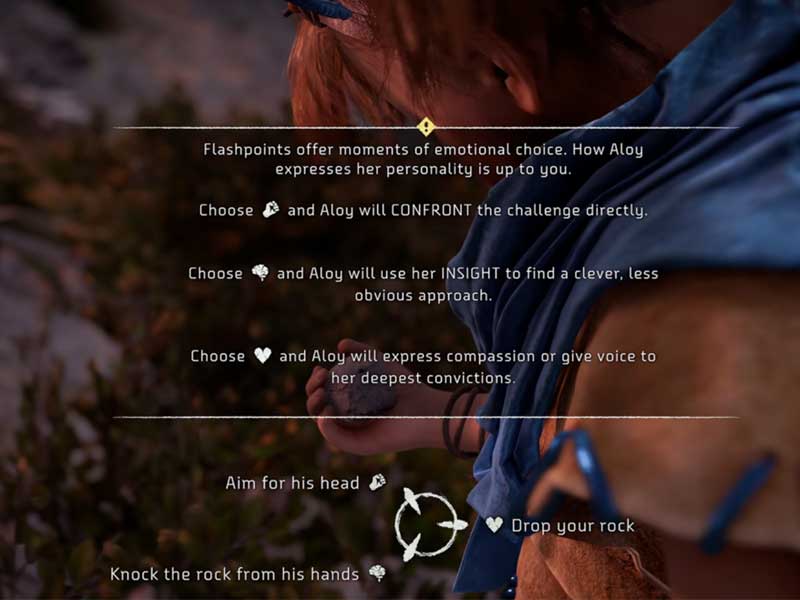
Further, Aloy can have different dialogue and reactions based on the player's choices of dialogue. However these are far removed from the player's actions in the game world. Reacting to Aloy being compassionate, logical, or brutal, is something which adds a layer to the gameworld in how the player can interact with non-playable characters; however it does not alter the progression of the narrative, or affect the gameplay.

If Horizon: Zero Dawn provided some of this overworld response to the player's actions beyond marking an area as done and giving the player materials to craft better items, then much of the open world presentation of the game would be made more immersive. This immersion would be due to the depth provided in having a range of results available to the players actions, as opposed to a binarycompletion of objectives. Enabling for different groups to flourish, or having side effects to the extent to which alloy hunts and destroys predators would mean that the actions of the character would carry weight in the world.

Instead what is shown in Horizon: Zero Dawn is the pressence of an open world without any variation to the outcome. In other games the player's actions and decisions make an impact on the game world world and effect it's open nature showing it to be a dynamic system and not just a landscape to get from point A to point B.


Sunday, 16 July 2017

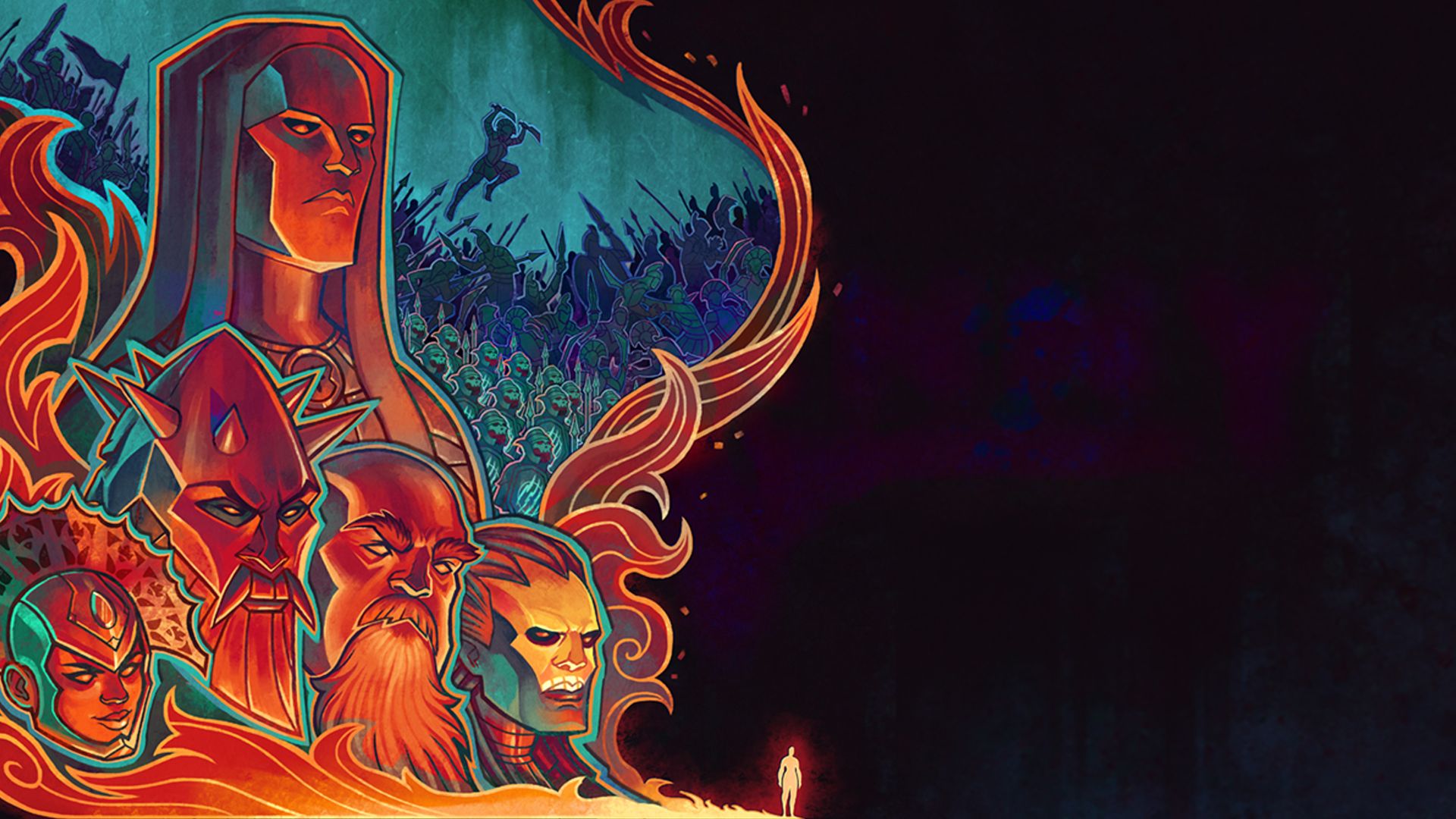
Torment Tides of Numeria


Torment Tides of Numeria is the reason people get into videogames, role playing games, fantasy, programming, you name it. Torment Tides of Numeria is a game that makes you want to go out and do something, to conquer worlds or at the very least shake it with your conviction. A would be god falling to earth, magic that's not magic, a host of dimensions and races that make the world seem larger than it is, a unique crisis system which enables for more than just combat. And a range of other little world building checkboxes within the overall presentation which hangs upon other elements of the game to form a unified fantastical experience.

There were divergent pathways, there were quests that flowed into other quests there were memorable characters and there were interesting dilemmas. I enjoyed Torment Tides of Numeria, just as much as I enjoyed Tyranny, or if we're harkening back to the inspiration for these videogames Planescape: Torment. The storyline follows many of the same beats as Planescape with the amnesic player-character, and their near mythical status as the person who cannot die. Torment, as opposed to Planescape, runs with this superpower and uses the fact that the player-character's near immortality is something which has been monopolised on in the past enabling for a god-worship of the player-character due to their inability to die and their mastery of the 'tides' a power that runs above the worlds themselves and affects dimensions. The player discovers tall of this through their playthrough of the videogame, choosing to return to their lofty godhood, or to again become humble in their endeavors to stop their powergrab/desire to live forever and come to terms with their mortal coil - so as to save all worlds from the disruption of the tides. Although this presentation gives the player an ability for self redemption (through their self sacrifice), as well as the ability to proceed with their 'I want to live forever' masterplan the impact of the end game choice does not appear to be as weighty as Planescape's. Although once again the player-character is dealing with the fate of the universe in comparison to their own life the impetus for living forever and atoning for that desire seems weaker than Planescape's self redemption, and then eternal damnation fighting the endless wars. The player-character although they can express guilt, does not explore what can change the nature of the man - instead the player-character proceeds to continue looking for the next objective and task without that impact of what they are and why they should change becoming apparent. Not that the game was a bad one at all, just the impact of the ending compared to Planescape meant that the resolution was not tied into what the player's character has done.


That all being said the companion character of Rhin made for a compelling narrative for the later half of the videogame. Rhin is an orphan thrust into the world of Numeria, who can later become a companion character and allow you to reuse cyphers (powerful spells); however as a child she is not very strong in a fight. And it's strange because the normalcy of having a child as a party member (who wasn't that useful originally) really grew on me as I was playing the videogame, to the extent that I kept her in the party because she didn't want to live out on the streets, and had a hard time dealing with different encounters. Eventually I learned how to play with Rhin as a companion character and used her to support my other characters, yet half way through my play I was offered a choice to release Rhin into an orphanage so that she could have a normal childhood (albeit in the future with a couple that she did not know). I initially refused based on the fact that Rhin did not seem comfortable with the arrangement, and that the whole thing felt as though I was abandoning the companion character as a nuisance, rather than actually trying to help her out. Later I was presented with a similar situation except instead of offloading Rhin to an orphanage, I was given the chance to return Rhin to her original home, which Rhin was a fan of. I was torn at this point because it was close to the end of the videogame, and I had leveled Rhin up to the point that she was contributing to the team. I actually didn't want to let her go. Eventually I relented and returned her to her own dimensional area, but for a while both narratively and gameplay wise I wanted to keep her on as a companion character.


So for that character of Rhin, and the crisis of doing the right thing vs being able to beat the game I was happy for the development of Torment Tides of Numeria. Apparently the whole situation with Rhin is largely optional and up to the player to complete as they wish, so it felt really nice to have finished the videogame with my own little contribution to my companion characters - I returned a girl back to her homeworld, how can that not be satisfying? And it wasn't something that I had to do but a nice self contained story that felt well told and also put pressure on me as a player and character to do the right thing vs. my own abilities (which is something that not a lot of videogames do). Planescape I think did this to a large extent with the ability for the player-character the 'Nameless One' to take damage or stunt skills in order to find more about themselves or the world, which was a good trade off in terms of a cost for knowledge.

Thursday, 13 October 2016

Mafia III


New Bordeaux, based on New Orleans, 1968 is not a place that I'm familiar with. There's no post-Katrina deluge of gray, or the dinky tunes of jazz playing in the background. There's little sign of the Marsalis family, or the presentation of a coastal city plagued by hurricanes. Instead it's the mafia who are the focus of New Bordeaux, presented among the background of history with the death of JFK, Martin Luther King, and the fallout of the Vietnam war setting the scene. Lincoln Clay rides around in his All American Samson Drifter rocking out to Steppenwolf, Johnny Cash, and Otis Redding as the mood strikes him taking out those who have wronged him in his revenge-fuelled rampage. It doesn't feel so much New Orleans during the late 60s but a statement about change in American culture, and how many people are still sorting out the aftermath.


Gameplay involves running and gunning, stealing items from the rival gangs, and forcibly taking over areas throughout New Bordeaux, in a similar fashion to Saints Row, or Far Cry 4's district allotment. The mission structure enables different sorts of presentations for the same sort of goals - you steal or destroy different items or men to force the current owner of the district to face you. The type of men and items change from district to district but largely operate in the same manner - cause as much ruckus as possible to fight the district owner and take over their land.

There is some variation with stealing different vehicles, or interrogating informants to lead you to an area where Lincoln can do further damage, or to steal further items/cash, but overall the playstyle remains the same. This repetition is fine especially since the music, AI and different locations do make each area feel different enough to still be enjoyable. The fact that each district is capped off with it's own particular story mission also breaks up the gameplay. This gives players a chance to have a setpiece where they confront the districts unique mob boss within their own hideout - ranging from the top of a hotel to a riverboat cruise. Though the gameplay does not make the game stand out.


The contention of Mafia III can be summed up in its enemies ranging from Redneck racist hillbillies, to the 'old mob,' all who are convinced they need to combat change to keep abreast of all these equal rights. Such presentation places Lincoln as a force of change - not for African-American rights, but rather a host of different groups allowing for equality of all races, as well as equality for those with different sexuality, or nationality. Although definitely taking a back seat to the murder and mayhem approach of Lincolns revenge narrative the fact that such motivation exists at all is reassuring - if a bit safe from the developers. Considering the proliferation of Black Panther movement, segregation being forcibly disbanded, and the move against conscription more could be done to position Lincoln, the player-character as a motivator for change.


Instead such talk is regulated to the back-channels of talk-back radio (between the hard right position of Remy Duvall and the left of WNBX radio hosts), through conversations between NPCs (natural order being disrupted because of equal rights), or racial slurs leveled at Lincoln. The quest arc does portray this as a central issue in the construction of Lincoln's revenge narrative (the kindly mob boss, Sal Marcano, turns out to be somewhat racially motivated), or in the takeover of a KKK-esque area (the racket sells racist material, and African Americans for sadistic sport). However Lincoln as a character doesn't respond to this in any particular way, except to state that this type of stuff is racist (with a few more expletives) and that he'd like to continue his revenge narrative. Other characters such as Father James, Lincoln's adoptive father Sammy Robinson, to the Haitian under-boss Cassandra, all do more for civil rights than the player-character does. Lincoln aids them somewhat, but always under the pretense that it will serve as fuel for his revenge. This engagement works within the overall presentation of Mafia III, but feels strangely safe in a game that's already positioning itself as reflecting on change.


What's important to note here is that the reasons for why such racism exists, as well as the response from the player-character, doesn't seem to involve more than a one word action of violence. Player choice is more or less limited to choosing to save or kill informants and the occasional mob boss, but beyond this the response approaching towards anything regarding a civil issue seems to not exist at all. (Potentially the player could heavily side with providing the Haitian subgroup with the most territory, this does not seem to enable civil engagement so much as increase your financial abilities. Ironically the other subgroups will get annoyed for not having territory of their own and turn on you). Then again most games tend to present themselves in a progressive light - Bioshock: Infinite with it's presentation of Columbia as a heavily racist fictional town only uses it as a backdrop to gun fights - Mafia III is no different. It introduces some of these ideas and figures as something which players can follow up on. Although not quite as limiting as 'the press x to lay respects' of Call of Duty: Advanced Warfare, an opportunity for the player to do more or at least engage more with the discourse would be appreciated.


In this Mafia III does break away from the traditional presentation of the Mafia series, it doesn't appear to do much more for civil rights. Through referencing the location, time period, and characters of a tumultuous time Mafia III can make use of the progressive themes of that period to simultaneously appeal to an idea of civil progress, whilst at the same time not pushing the envelope of what should occur.


Saturday, 21 May 2016

Far Harbor


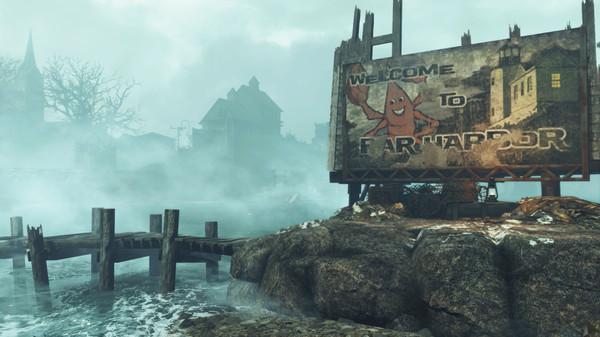
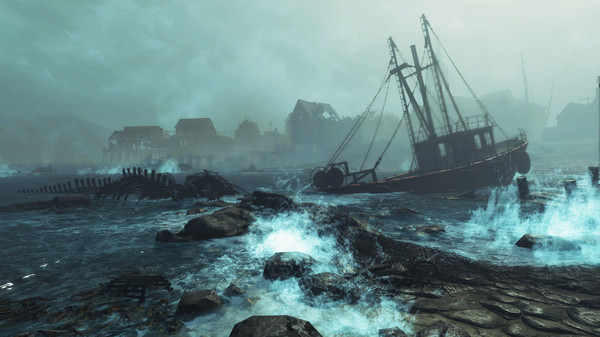
So I booted up the premium content DLC pack last bit of the season pass for Fallout 4 over the weekend and I had a little play. A little play where I finished the main quest, gone through a bunch of dialogue with Nick Valentine, and resolved the settlement problems on the island. In all  it was a lackluster experience not at all worth the 25 USD of the standalone nor the 50 USD of the season pass and would be buyers would be better off grabbing other games for the price of this DLC. For me personally this is due to a small quest pool, and quest depth (in terms of available actions), followed by janky game mechanics and a lack of character in many NPCs. However before reaching into that criticism lets look to what the DLC does correctly.

For the positives of the DLC, its all mainly constrained to the aesthetic content such as equipment, weapons and new area that the game showcases, however these while interesting almost fall into the modding level of quality in terms of what they add to the game. Other mods provide much of these improvements already to the game such as expanding on settlement behavior, adding in weapons, providing new aesthetic looks to players and NPCs. Nevertheless the quality and the scope of the DLC might be seen as slightly improved from modders, especially seeing as it is paid content. So depending on how much the art style of the DLC hits you, it can be considered as a nice bit of content for those who don't use mods.


That aside what Bethesda can alter and make use of (that many modders don't have is access to) are game mechanics, voice actors, and the ability to put in quality stories.

Voice acting within the DLC is largely good, but in terms of examining characters beyond the five or six lines of dialogue that they have reveals a lot of shallowness within the game world. Talking to Children of Atom reveals a very shallow conception of worship or religion. An option to ask why, or to challenge some convictions (including those of the Piratey Far Harbor) would make for some interesting conversation, but to a large part many NPCs play caricatures and are fixed in what they can say and do. That being said the same occurs within Fallout 4's main game, however there the game goes to a lot more effort to hide this lack of options, through scripted confrontations (through the follower quests or main quest). In Far Harbor this lack of options is too obvious for a suspension of disbelief to ignore.

The game mechanics consist a hacking tower defense mini-game that looks and plays worst than any hacker aesthetic tower defense I can think of (see Antichamber, Tron 2.0, Minecraft, Consortium's shooter training, Cradle's mini-games). This tower defense section was made using the workshop mechanics and as such makes for a frustrating experience.

Fallout 4: Far Harbor's minigame, and yes that overlay is always on the screen.


To put this in perspective I spent a 15 minutes trying to put down a square block to complete a puzzle, simply because the clipping would cause the block to disappear among another one. Never mind the fact that this mini-game was not at all enjoyable, but also critical to finishing off the DLC's quest line.


Kellogg's dream sequence

This especially in the light of Kellogg's dream sequence of Fallout 4's main game seems to be a surprising oversight in design - nearly anything could have been placed in that section, but they chose to have an uninspired, broken and visually bland level. It seems surprising that it was put in the game at all especially since all it does is unlocks an audio log. It seems to detract a lot from the DLC in terms of quality. The rest of the game falls into the 'hey watch out for radiation' or the shoot and loot which is the bread and butter of all Fallout games.

The story which carries players through to the DLC and through to different quests is an uninspired retelling of events that occurred in the first game.

In this the story of Far Harbour, largely a retelling of Fallout 4's narrative, fails since it adds  nothing to the overall world of Fallout. For example plot of the DLC revolves around finding a missing girl and through that choosing the fate of three communities on an island. Fallout 4 revolves around finding a missing son (boy) and through that choosing the fate of three communities on a landmass. Of course there are some differences, but the main narrative beats (including that of a level in someone elses brain) doesn't provide any new surprises. The one interesting aspect of the plot  questioning whether the player is a synth or human, is quickly forgotten among the gameplay of going to a location, kill enemies and collect an item.

The way in which the narratives complete seems to rely more on providing a neat end to stories by having factions or faction leaders dying off, rather than seeing how they can operate together. A compromise can be achieved by simply not completing quests, but the fact that there's no option provided by Bethesda to compromise is telling of the simplicity involved with all the quests in this DLC.

To emphasis this the backstory for each faction is kept an arms length away from quests. Meaning that any revelations the player makes about each community has no bearing on the quest options they can make. The fact that certain leaders were assassinated, are synths, or have history with other characters makes no difference to how players can complete quests. In the end of the DLC players find their missing girl, saving or kill the different factions on the island and go back to the Commonwealth - with little to no resolution provided by the game besides another gun.

In all it seems that the actions you take really do not matter in the scheme of things. Within Fallout 4's main game building settlements, completing companion quests, finding the player's son and talking to the different factions felt like a nuanced journey. This DLC seems like a mods attempt to emulate some of that scope, instead of doing its own thing.


Saturday, 2 April 2016

Shardlight and post apocalyptica


Shardlight Wadjet Eye Games gives you two things from its outset a strong female protagonist and a heavy setting of post-apocalyptica. Both of which promise a unique experience but then quickly falls into a series of safe tropes (government controlling the populace) that hold the promise of the game back. Though some of the puzzles work well, overall it's the lack of immediate class discord, or harshness in the world

Starting out your character Amy is tasked with fixing a reactor core for a post-apocalyptic city at the hopes of winning a lottery ticket for a vaccine to 'green lung.' Through this innocent task you're thrust into a class war between the everyday citizens who toil in post apocalyptica and the aristocrats who govern. For the most part the game presents each of these early plot points successfully, from a dying man's wish, to an asthmatic like fit for your character. These sections enabled the urgency of the plot to become apparent - dangerous jobs are taken by citizens to improve their chance of a cure, capitalising on their desperate measures.  Mercy killings are rampant, and for all appearances life is cheap.


But the game doesn't carry on with it's  life is cheap ethos, aside from killing a main-ish character later on, everyone in this post-apocalyptic world is accommodating. They act altruistically with every interaction, making sure that you're well looked after. This while refreshing seems to go against the setting of the game as something to be survived, and rather a community building exercise - something which the game could lean more heavily towards than pointing out a class struggle, that doesn't appear to be present, especially when all the characters you originally meet are autonomous and don't appear to be suffering from government intervention.

Green lung and the lottery seem to be the main points of contention for this class war, but with that the game doesn't present the plague as an epidemic, but rather something that people merely have to endure, and with that especially considering there's no direct stigma given for having green lung (though it is alluded to for other characters).


But this aside the game is a good one in it's engagement initially, with the immediate portrayal of a failing city, but the uncovering of the community and the stable political situation made much of the world fall apart. Far from being a hellscape of suffering it really just seemed that people were one conversation away from solving many of their woes.

If the threats portrayed within the game were indeed life threatening, or the lot of many citizens visibly made worse by the ruling class then this game would be much more palatable. As it is with the escalation of threats and the portrayal of political injustice it doesn't bring much new ideas to the themes presented. Going back to other Wadjet Eye Games, such as Primordia or Gemini Rue give a much more nuanced world where the world reflects much of the story. So while there are certainly sections which are presented well in the game - primarily the start - the execution overall lacks the polish of previous games.